Over the past decade, climate and biodiversity finance have shifted into a new era, one defined by data intelligence and AI‑enabled decision‑making and Profonanpe, Peru’s Environmental Fund, sits at the center of this transformation. As the institution responsible for channeling international resources from organisations such as the GCF, AF, and bilateral donors, it drives the execution of environmental projects across the country and to deliver on this mission, Profonanpe continually adopts emerging technologies. As a trusted national partner, it carries the responsibility to ensure that AI is used with fairness, transparency, and accountability. Here’s where, AI TRiSM, featured in the current Gartner Hype Cycle, may offer this organisation the governance, risk, and security practices needed to strengthen that commitment and support responsible innovation.
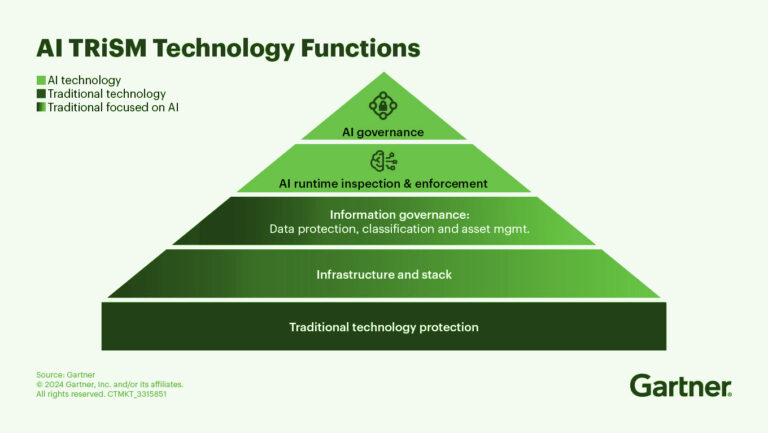
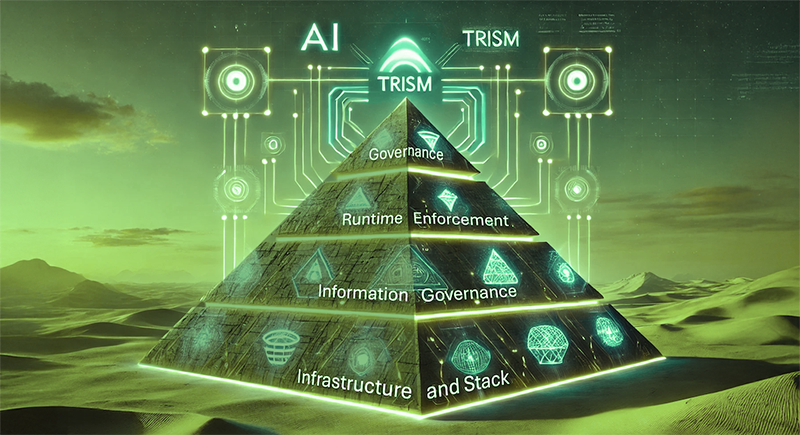
AI TRiSM is a governance framework to help organisations manage the risks associated with AI adoption. It includes four core pillars: trust, risk, security, and model governance. Together, these elements ensure that AI systems are not only effective but also safe, fair, and accountable.
These articles describe how AI TRiSM can be leveraged by Profonanpe to enhance its role as a key articulator and partner to drive innovation and channel more funds towards Environmental Sustainability in Peru.
Since the launch of ChatGPT in 2022, Artificial Intelligence (AI) has rapidly become embedded across industries, powering advancements in smart cities, smart healthcare, smart manufacturing, smart virtual environments, and even the Metaverse. A Goldman Sachs report estimates that widespread AI adoption could increase annual global GDP by 7%, equivalent to nearly $7 trillion, over the […]
AI’s rapid adoption has brought new forms of risk that legacy controls were never built to address. While traditional systems are effective at handling structured data risks (Habbal, 2024), many organizations now deploy models, copilots, and agents that process unstructured information, PDFs, Word documents, media files, emails, and other formats that make up most enterprise data. […]
The European Union’s AI Act, the OECD AI Principles, and UNESCO’s AI Ethics Guidelines all reflect a growing consensus: AI must be governed with the same seriousness as financial systems or environmental regulations. AI is reshaping the finance industry by enhancing decision‑making, operational efficiency, and customer experience through machine learning and big‑data analytics. Key applications […]
The rapid evolution of AI presents both a monumental opportunity and a critical challenge for climate finance organizations. The efficiency gains are real, but they cannot come at the cost of data security and national sovereignty. Oliver Barret – Janus In 2025, the Green Climate Fund (GCF) and the Adaptation Fund (AF) conducted a scoping […]
As Peru’s national environmental fund, Profonanpe plays a central role in managing climate‑finance resources, designing and executing conservation projects, supporting Indigenous communities, and stewarding green investment portfolios. With increasing pressure from donors and global climate‑finance institutions to modernise data systems, Profonanpe faces a strategic opportunity: adopting AI TRiSM (AI Trust, Risk, and Security Management) to […]
The finance sector faces substantial challenges in adopting AI Trust, Risk, and Security Management (AI TRiSM), largely because it operates in a highly regulated and data‑sensitive environment. Financial institutions must safeguard vast amounts of confidential customer information while complying with strict privacy laws, all amid escalating cyber threats. AI models used in credit scoring, lending, […]
AI TRiSM is moving from experimentation to becoming part of the core digital infrastructure that shapes how capital flows into climate mitigation and adaptation projects (EY, 2025). As climate risks intensify and AI adoption accelerates, funds and intermediaries that cannot demonstrate trustworthy, well-governed, and secure models will increasingly struggle to attract public and private finance […]
The AI TRiSM (AI Trust, Risk and Security Management) technology market is expanding quickly as organisations move from experimental pilots to large‑scale, business‑critical AI systems (Precedence Research, 2025). Recent estimates suggest the global AI TRiSM market is worth around USD 2–3 billion in the mid‑2020s and could grow to roughly USD 7–21 billion by the early‑to‑mid 2030s, reflecting strong double‑digit […]
Public‑sector and highly regulated organizations should adopt a TRiSM‑rich technology architecture, emphasizing strong governance, centralized data management, and controlled use of external AI models. Gartner – The TRiSM Rich Sandwich Archetype. Organisations and environmental finance organisations should ground their TRiSM strategy in the principles of Ethical AI. Ethical AI examines philosophical and societal questions related […]
The financial industry represents the most mature market for AI adoption and, consequently, the sector with the most well-documented cases of algorithmic failure. These cases demonstrate that without a structured TRiSM approach, the “black box” nature of AI can transform a minor technical error into a catastrophic financial and reputational crisis. Systemic Ethical Failures: The […]
The application of AI in the environmental sector is currently concentrated in two areas: the Monitoring, Reporting, and Verification (MRV) of carbon credits, and the automation of ESG (Environmental, Social, and Governance) reporting. However, the lack of standardized governance has led to a “crisis of trust” in voluntary carbon markets, where AI is frequently accused […]
The views shared in this blog are solely my own and do not represent or intend to influence Profonanpe’s image or reputation. The perspectives discussed form part of an academic technology research assessment in which I am required, as a student, to adopt the role of a professional consultant for the organisation where I am currently completing my internship.
Fallon Equis (Student at The University of Waikato)