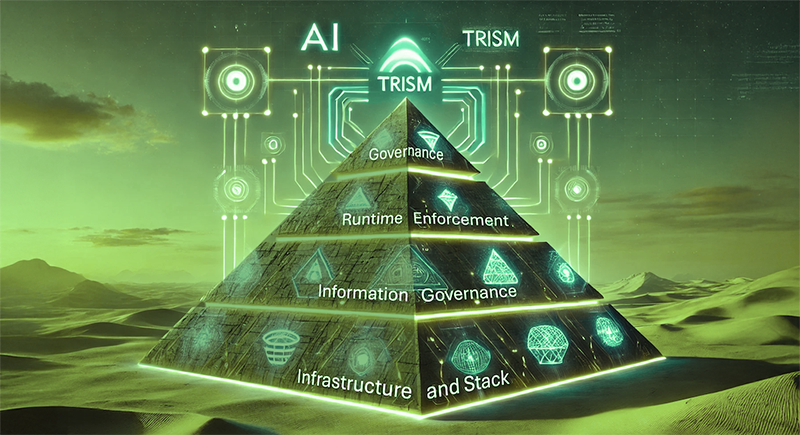
The financial industry represents the most mature market for AI adoption and, consequently, the sector with the most well-documented cases of algorithmic failure. These cases demonstrate that without a structured TRiSM approach, the “black box” nature of AI can transform a minor technical error into a catastrophic financial and reputational crisis.

Systemic Ethical Failures: The Dutch Tax Authority Crisis
A profound example of the social and institutional risk posed by unmanaged AI occurred in the Netherlands between 2016 and 2021. The Dutch taxation authority deployed an AI system to create risk profiles aimed at detecting welfare fraud. However, the criteria used to train the model included discriminatory indicators such as dual nationality and low income. The system incorrectly flagged thousands of innocent families as fraudulent, leading to aggressive benefit clawbacks that forced families into extreme financial hardship. The fallout of this scandal was so severe that it led to the resignation of the entire Dutch government. This case underscores the “Trust” aspect of AI TRiSM, when AI is used for high-stakes decision-making without ethical guardrails, human oversight, or transparency, the resulting damage can destabilize entire public institutions.

The Reputational Crisis of Algorithmic Bias: The Apple Card Scandal
The failure of the “Fairness” pillar in AI TRiSM can lead to severe reputational fallout that lingers far longer than a financial fine. A major scandal erupted surrounding the Apple Card, issued by Goldman Sachs, when its AI-driven credit approval system was accused of gender discrimination. Users reported that women were consistently granted lower credit limits than their male spouses, even when the women had higher credit scores and superior financial profiles.
Because the algorithm operated as a “black box” without built-in explainability or bias-auditing tools, neither Apple nor Goldman Sachs could provide a satisfactory explanation for these discrepancies when challenged on social media. The inability to audit their own decision-making transformed a technical bias into a viral PR disaster, leading to enhanced regulatory supervision and a permanent stain on the brand’s reputation. This case serves as a third-order insight into the necessity of AI lineage tracking; without knowing where and why bias entered the training data, an organization is defenseless against accusations of systemic inequity.
Algorithmic Cascades and Market Fragility: The Knight Capital Precedent
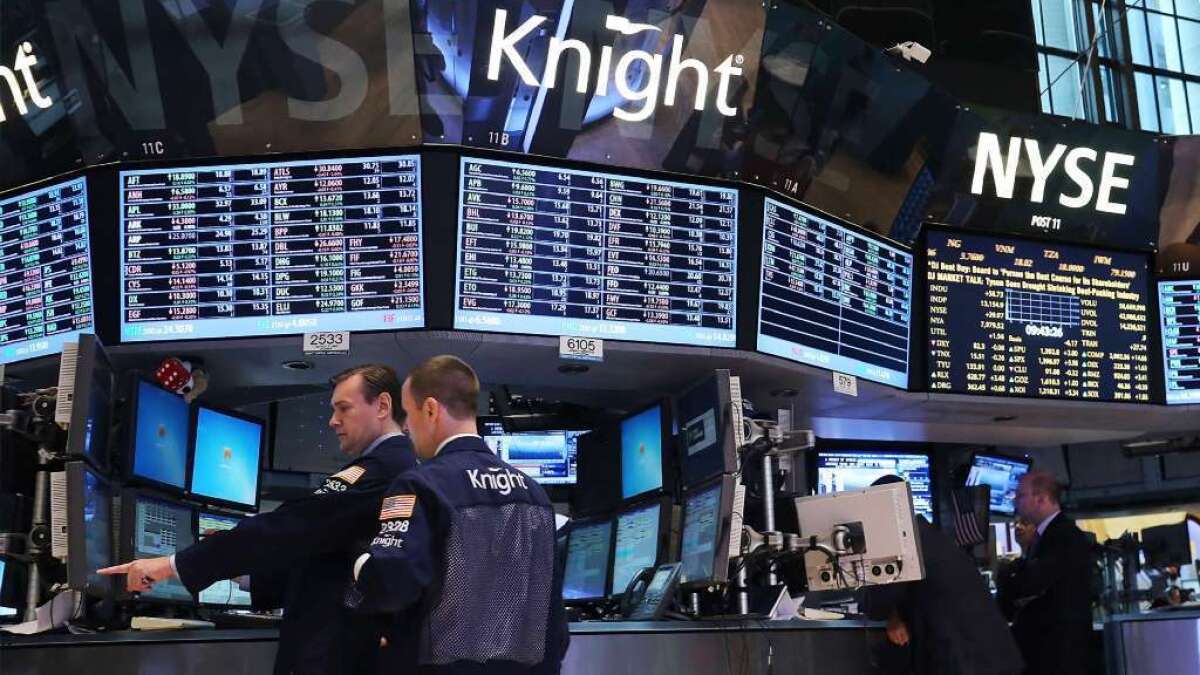
The 2012 collapse of Knight Capital Group remains the definitive case study in the lack of automated fail-safes and poor ModelOps governance. Although the incident occurred before the formalization of the “TRiSM” acronym, it illustrates the exact risks the framework is designed to mitigate. A stray piece of obsolete test code was accidentally activated during a software update, causing a rogue trading algorithm to execute 4 million erroneous trades in just 45 minutes.
Without a manual override or real-time monitoring system in place, the algorithm wiped out US$440 million of capital, leading the firm to bankruptcy within days. Modern AI TRiSM protocols, specifically those emphasizing “stop buttons” and real-time runtime inspection, are engineered to provide the defense-in-depth necessary to halt such unmanaged cascades before they reach a terminal threshold.
Aveni. (2025). AI audit failures in financial services: Lessons from the front line. https://aveni.ai/blog/ai-audit-failures-in-financial-services/
BSR. (2025). Harnessing AI in sustainability: Emerging use cases and guardrails. https://www.bsr.org/en/reports/harnessing-ai-in-sustainability-emerging-use-cases
Ciberspring. (2025). What happens when AI gets it wrong: Real-world misclassification consequences in finance and crypto. https://ciberspring.com/articles/what-happens-when-ai-gets-it-wrong-real-world-misclassification-consequences/
Cognaize. (2025). Case study: ESG and sustainability report automation for a global data provider. https://www.cognaize.com/case-studies/esg-and-sustainability-report-automation
Darrow.ai. (2025). The shifting legal landscape: Greenwashing cases and the duty to verify carbon credits. https://www.darrow.ai/resources/greenwashing-cases
Deloitte Global. (2025). AI for infrastructure resilience: Preventing $70 billion in annual disaster-related losses. https://www.deloitte.com/global/en/about/press-room/ai-for-infrastructure-resilience.html
Deloitte. (2025). AI ROI: The paradox of rising investment and elusive returns. https://www.deloitte.com/global/en/issues/generative-ai/ai-roi-the-paradox-of-rising-investment-and-elusive-returns.html
EY. (2025). The business case for responsible AI: Reputation, regulation, and realization. https://www.ey.com/en_us/insights/ai/the-business-case-for-responsible-ai
Gartner. (2025). Gartner survey finds risk leaders concerned about low-growth economic environment and AI risks in 3Q25. https://www.gartner.com/en/newsroom/press-releases/2025-11-06-gartner-survey-finds-risk-leaders-concered-about-low-growth-econ-environment-and-ai-risks-in-q3
Gen Re. (2025). Generative AI and its implications for weather and climate risk management. https://www.genre.com/us/knowledge/publications/2025/september/gen-ai-and-its-implications-for-weather-and-climate-risk-management-en
Help Net Security. (2025). Securing smart grids: Threat vectors and adversarial risks in critical infrastructure. https://www.helpnetsecurity.com/2025/12/04/sonia-kumar-analog-devices-securing-smart-grids/
IBM. (2025). Cost of a data breach report 2024: Financial industry insights. https://www.ibm.com/think/insights/cost-of-a-data-breach-2024-financial-industry
IBM. (2025). Understanding model drift: Concept, data, and upstream changes. https://www.ibm.com/think/topics/model-drift
ISDO. (2025). Sustainable finance and AI: ESG risk assessment with machine learning. https://isdo.ch/sustainable-finance-and-ai-esg-risk-assessment-with-machine-learning/
ITCP Academy. (2025). Industry report: Generative AI in risk and compliance 2025. https://www.itcpeacademy.org/genai-ereport
Knostic. (2025). AI governance statistics and the maturity of enterprise risk programs. https://www.knostic.ai/blog/ai-governance-statistics
LeewayHertz. (2025). AI TRiSM: Foundational pillars and implementation strategies. https://www.leewayhertz.com/ai-trism/
MDPI. (2024). Security of smart grid: Cybersecurity issues, potential cyberattacks, and future directions. https://www.mdpi.com/1996-1073/18/1/141
MDPI. (2025). Artificial intelligence in banking to implement and communicate ESG strategies. https://www.mdpi.com/2071-1050/18/2/732
Palo Alto Networks. (2025). The state of generative AI 2025: Security and TRiSM integration. https://www.paloaltonetworks.com/cyberpedia/ai-trism
PracticalESG. (2025). Verra cancels Kariba credits and improves project reviews following South Pole controversy. https://practicalesg.com/2025/10/verra-cancels-kariba-credits-improves-project-reviews/
Proofpoint. (2025). AI TRiSM: Protecting training data and model parameters. https://www.proofpoint.com/us/threat-reference/ai-trism
Prism. (2025). The role of AI in scaling global carbon markets: Risks of algorithmic greenwashing. https://prism.sustainability-directory.com/scenario/the-role-of-ai-in-scaling-global-carbon-markets/
Relyance AI. (2025). The credit card bias scandal and the cost of poor AI governance. https://www.relyance.ai/blog/ai-governance-examples
Royal Society Publishing. (2024). Physics-informed machine learning case studies for weather and climate. https://royalsocietypublishing.org/rsta/article/379/2194/20200093/41210/Physics-informed-machine-learning-case-studies-for
SimpleSolve. (2025). Insurers are using AI to tackle extreme weather risks in America. https://www.simplesolve.com/blog/insurers-are-using-ai-to-tackle-extreme-weather-risks-in-america
Splunk. (2025). AI trust, risk, and security management: Real-world risk scenarios. https://www.splunk.com/en_us/blog/learn/ai-trism-ai-trust-risk-security-management.html
SQ Centre. (2025). Transformative case studies for financial institutions: ROI in fraud detection and automation. https://www.sqcentre.com/blog/generative-ai-use-cases-in-finance-transformative-case-studies-for-financial-institutions/
University of Oxford. (2025). Systematic review of the literature on carbon offsets: A 25-year evidence assessment. https://voteearthnow.com/collapse-of-the-carbon-offset-lie-largest-ever-study-proves-carbon-offsets-dont-cut-emissions/
Workday. (2025). Top 10 AI use cases for finance operations and strategic value. https://blog.workday.com/en-ca/top-10-ai-use-cases-finance-operations.html
Zendata. (2025). Implementing effective AI TRiSM with advanced data observability. https://www.zendata.dev/post/implementing-effective-ai-trism-with-zendata