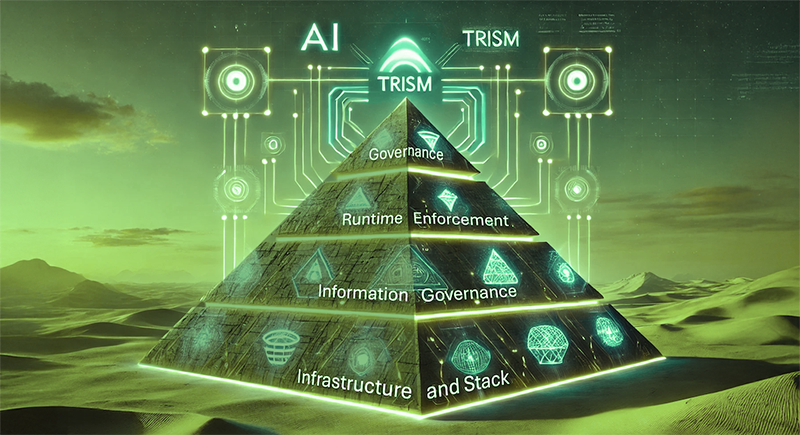
The rapid evolution of AI presents both a monumental opportunity and a critical challenge for climate finance organizations. The efficiency gains are real, but they cannot come at the cost of data security and national sovereignty.
Oliver Barret - Janus
In 2025, the Green Climate Fund (GCF) and the Adaptation Fund (AF) conducted a scoping study on the use of Artificial Intelligence in climate change evaluations. The study found that AI technologies are gradually entering the climate‑evaluation field, but adoption remains significantly slower than in other sectors. AI’s strongest current value lies in processing qualitative information; summarizing documents, extracting themes, drafting and coding text, and identifying broad patterns across large datasets. The study also noted that organizations are increasingly using AI to support large‑scale, low‑cost data collection through satellite imagery, mobile data, and other remote‑sensing tools, which is particularly valuable in low‑resource settings.
Despite this potential, the study concluded that AI use in climate evaluations remains limited, with most applications still concentrated in climate research and modelling rather than evaluation practice. Environmental institutions are also divided on whether to rely on external commercial AI tools or invest in secure in‑house systems. Some organizations pursue internal models to reduce risk, others opt for commercial tools due to lower cost, and a hybrid approach, external models paired with in‑house data storage, is emerging as a middle ground.
The GCF and AF study also highlighted significant risks and limitations for evaluation organizations in less advantaged countries when using commercial AI technologies for climate‑finance assessments:
- Data‑driven limitations: AI systems inherit the quality and representativeness of their training data. Poor or biased datasets can lead to hallucinations, unreliable interpretations, and non‑replicable results. Because most training data originates from wealthier countries, AI tools may fail to capture the realities of smaller or poorer nations, reinforcing global inequities.
- Bias, validation burdens, and security risks: AI can reproduce harmful biases embedded in internet‑scale data. In many cases, the efficiency gained from AI is offset by the extensive human validation required. International organizations also face challenges such as limited structured data, data‑security risks when using external platforms, and the environmental footprint of AI infrastructure.
- Unequal access and capacity gaps: Access to AI tools is uneven across countries. Language barriers, infrastructure limitations, and resource constraints disproportionately disadvantage smaller and poorer nations. These disparities risk widening technological divides and accelerating brain drain, limiting the ability of vulnerable countries to develop locally relevant AI solutions.
AI TRiSM is Crucial
Given these findings, the study emphasizes that the climate‑evaluation community, stand to benefit from emerging technologies, but only with strong foundations in Trust, Risk, and Security Management (TRiSM) since it was also found that AI still struggles with causal reasoning, making human judgement indispensable for interpretation and ensuring valid evaluation findings. Establishing shared AI‑governance frameworks, validation protocols, and risk‑management systems, alongside investments in infrastructure and capacity building, is essential for ethical and responsible adoption.
Thus, the potential of Generative AI to accelerate climate‑finance mobilization is undeniable. For climate‑finance teams such as Direct Access Entities or national environmental funds like Profonanpe, AI tools capable of rapidly generating concept notes, analyzing dense documentation, and accelerating project pipelines offer a transformative boost in efficiency. Yet this pursuit of speed introduces serious vulnerabilities: sensitive national climate data is increasingly being shared with external platforms in ways many stakeholders do not fully understand.
This concern is especially relevant for Profonanpe, an internationally accredited entity of both the GCF and AF, whose work is grounded in transparency, rigor, ethical conduct, and strong corporate governance.
Public, commercial AI tools pose three major risks when used for climate‑finance work:
- Loss of data sovereignty and intellectual property: Sensitive national data may be stored or used to train AI models without binding protections.
- Confidentiality breaches: Project information and stakeholder communications may be exposed, violating legal agreements and eroding trust.
- Strategic disadvantage: Leaked insights into national vulnerabilities or funding strategies could weaken negotiating positions or benefit competing actors.
Ideal Solutions
This is precisely where TRiSM technologies become essential. Emerging enterprise‑grade solutions now offer guaranteed data sovereignty for governmental and accredited entities. By adopting a strategy that balances innovation with robust security and governance, organizations like Profonanpe can harness the power of AI to accelerate climate action while maintaining full confidence, control, and compliance.
available Software
AI TRiSM Solutions
Janus Platform
Clarity AI
Climate AI Org
Independent Evaluation Unit. (2025). Scoping study on the use of artificial intelligence in climate change evaluations. Green Climate Fund. https://ieu.greenclimate.fund/document/scoping-study-ai-climate